Case study
Landloom: +284% organic traffic for a real estate data platform with SEO and generative engine optimization
Landloom is a real estate data platform for investors and professionals focused on Bali and Lombok. With a combined SEO and generative engine optimization strategy, organic traffic grew 284% in 12 months (April 2025 through March 2026, measured in Google Analytics 4) to 12,847 users and 18,234 sessions a year, with #1 rankings for dozens of English-language search terms.
The platform has since been taken offline. The figures cover the period it was live.
- Industry
- Real estate data, proptech
- Market
- English-language, Bali and Lombok (Indonesia)
- Services
- Technical SEO, content strategy, GEO, AI scraping platform
- Period
- April 2025 to March 2026
- Status
- Now offline
Why a new real estate data platform had to build visibility from zero
Landloom launched as a new platform in a market where international real estate sites and established brokers dominate the search results. With no existing authority or organic visibility, the platform had to become findable from scratch for investors looking for real estate data and market insights on Bali and Lombok.
A new domain comes with an extra problem: for the first few months, nothing happens, no matter how good the content is. So the strategy had to be built from day one on something competitors couldn't copy.
How SEO and generative engine optimization combined with proprietary data
First came the technical SEO foundation: fast load times, a logical site structure, and clean indexability. On top of that sat a content strategy aimed at the long-tail search terms investors actually use, combined with GEO so the content also gets picked up by ChatGPT, Perplexity, and Google AI Overviews.
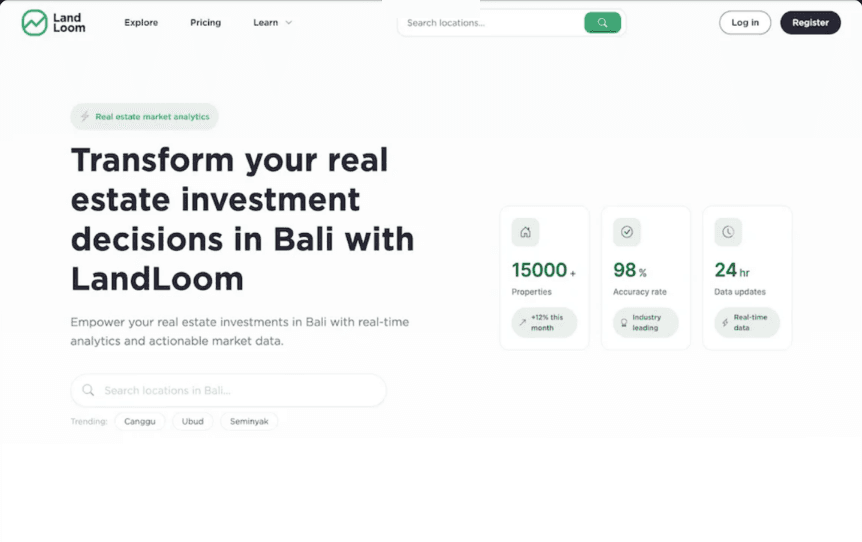
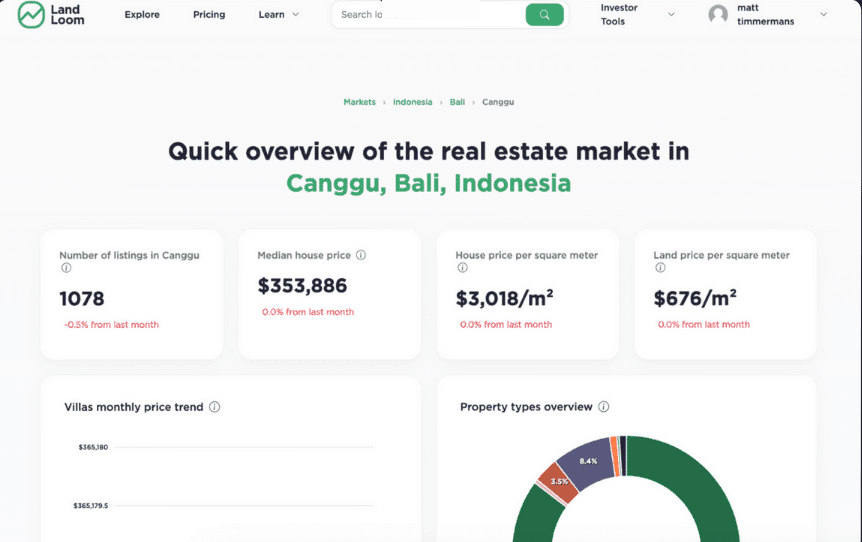
What set Landloom apart was its own data source. We built an AI platform that automatically scrapes real estate marketplaces and Airbnb and presents all the market data, from prices and square footage to trends, in a dashboard. That unique data is what makes the content citable: numbers you can't find anywhere else are exactly what search engines and AI models want to reference.
What the SEO and GEO work for Landloom included
- 01Technical SEO: load time, site structure, indexability, internal links.
- 02Keyword research on English-language long-tail terms about real estate on Bali and Lombok.
- 03Content strategy and pages built around those terms, with the proprietary market data at the core.
- 04AI scraping platform that continuously pulls data from real estate marketplaces and Airbnb and displays it in a dashboard.
- 05Generative engine optimization: a direct answer up top, question headings, citable paragraphs with figures and a measurement date, schema markup.
- 06Monthly tracking in Google Analytics 4 for as long as the platform was live.
Results
The result: +284% organic traffic in 12 months
Traffic stayed flat for the first four months, which is typical for a new domain. Growth kicked in from month five, adding up to +284% organic traffic over the full 12-month period.
The platform is now offline; the dashboard and market data are shown in the images on this page.
 Analytics
Gebruikers
12.847
Sessies
18.234
- +284%
- organic traffic, April 2025 to March 2026, Google Analytics 4
- 12,847
- users in 12 months
- 18,234
- sessions in 12 months
- #1
- for dozens of English-language search terms about real estate on Bali and Lombok (March 2026)
Which platforms benefit from SEO and GEO built on proprietary data
Alongside Own Property Abroad, Landloom is the second real estate platform where we combined SEO and GEO with proprietary data. The same approach fits any platform sitting on unique data: comparison sites, marketplaces, data products, and SaaS tools with numbers nobody else has. That's the content AI models cite.
FAQ
Frequently asked questions about SEO and GEO for new platforms
How long does it take for SEO to work on a new domain?+
For Landloom, traffic stayed flat for the first four months and growth kicked in from month five, adding up to +284% over 12 months. That pattern is normal for a new domain: indexing and trust come first, rankings come later. Stop after three months and you miss the growth.
What is generative engine optimization, and how is it different from SEO?+
SEO focuses on rankings in Google. Generative engine optimization (GEO) focuses on getting cited by AI models like ChatGPT, Perplexity, and Google AI Overviews. The techniques overlap, but GEO calls for content a model can quote: a direct answer, proprietary figures with a measurement date, and paragraphs that hold up on their own. For Landloom, the proprietary market data supplied exactly those citable numbers.
Why does proprietary data matter so much for SEO and GEO?+
Because numbers nobody else has are the reason to cite your page instead of a competitor's. Landloom scraped real estate marketplaces and Airbnb and published prices, square footage, and trends you couldn't find anywhere else. Search engines and AI models point to the source of data like that.

Get started
Want more organic traffic from Google and AI?
From the technical foundation to content that ranks and gets cited. We'd be glad to look at the opportunities for your platform.